
What is a Cataract?
The natural lens inside the eye is clear. Light rays enter the eye through the cornea, pass through the clear lens and land on the back of the eye (retina). The brain interprets the image from the retina. A cataract is the gradual clouding of this natural lens inside the eye. It is not a growth or a “skim” on the eye. It is the actual lens of the eye. Cataracts are very common especially in people over the age of 55. There is no known treatment to reverse the growth of cataracts. Once a cataract develops it will continue to cause progressively blurred vision until it is surgically removed.
How does a Cataract Cause Blurred Vision?
The light rays entering the eye have more difficulty passing through the cloudy lens (cataract) to reach the retina. This causes blurred vision. People with cataracts may complain that their vision appears blurry, hazy, smoky or waxy. They may also notice more difficulty with reading, recognizing faces or walking, especially in low light. Driving at night may become difficult and even dangerous.
When does a Cataract need to be Removed?
Advances in cataract surgery have made this one of the safest and most frequently performed surgeries today. Cataract surgery is generally recommended when your vision impacts your activities of daily living, making it more difficult to perform everyday tasks. You may want to consider having cataract surgery if you are having more difficulty driving at night, reading, cooking, shopping, working, watching TV or using the computer due to your vision.
How will Cataract Surgery Affect my Vision?
The goal of cataract surgery is to correct blurred vision caused by the cataract. During the surgery, the ophthalmologist (eye surgeon) removes the cataract and puts in a new artificial lens called an intraocular lens (IOL). Cataract surgery will not correct other causes of blurred or decreased vision, such as glaucoma, diabetes, or age-related macular degeneration. Most people still need to wear glasses after cataract surgery. Elective options are available to reduce this need for glasses.
Examination for Surgery
The surgeon will personally perform a dilated eye examination even if you have already been evaluated by your optometrist. To start your visit, a technician will record your full medical history and perform a variety of measurements to determine your best-corrected vision. The surgeon will perform an examination of your eyes to detect eye disease or conditions that may affect your surgery or your eyesight after surgery. After determining the need for surgery, the surgeon will discuss the risks and benefits of the procedure with you.
Determining the Correct Intraocular Lens Power
New technology available in state-of-the-art equipment predictably measures your eyes, drastically reducing the margin of error. Measurements for lens implants used in cataract surgery are much different than for glasses. For cataract surgery, a variety of very specific and precise measurements of your eye have to be performed to assist the surgeon in calculating the IOL power best suited for your eye.
Where is the Surgery Performed?
You do not have to go to the hospital for this procedure. Cataract surgery performed in a surgery center is far less expensive, much more convenient, and safer than in a hospital. The Cataract and Laser Center is located on the lower level of Eye Centers in Crossville.
What to Expect the Day of Surgery?
You do not have to change clothes. The anesthetist will review your medical history as well as monitor your vital signs before, during, and after the procedure. We usually give oral sedation to help you relax. An IV is not routinely required but can be started anytime if needed or desired. Your eye will be dilated and then numbed with a special numbing gel made for eye surgery.
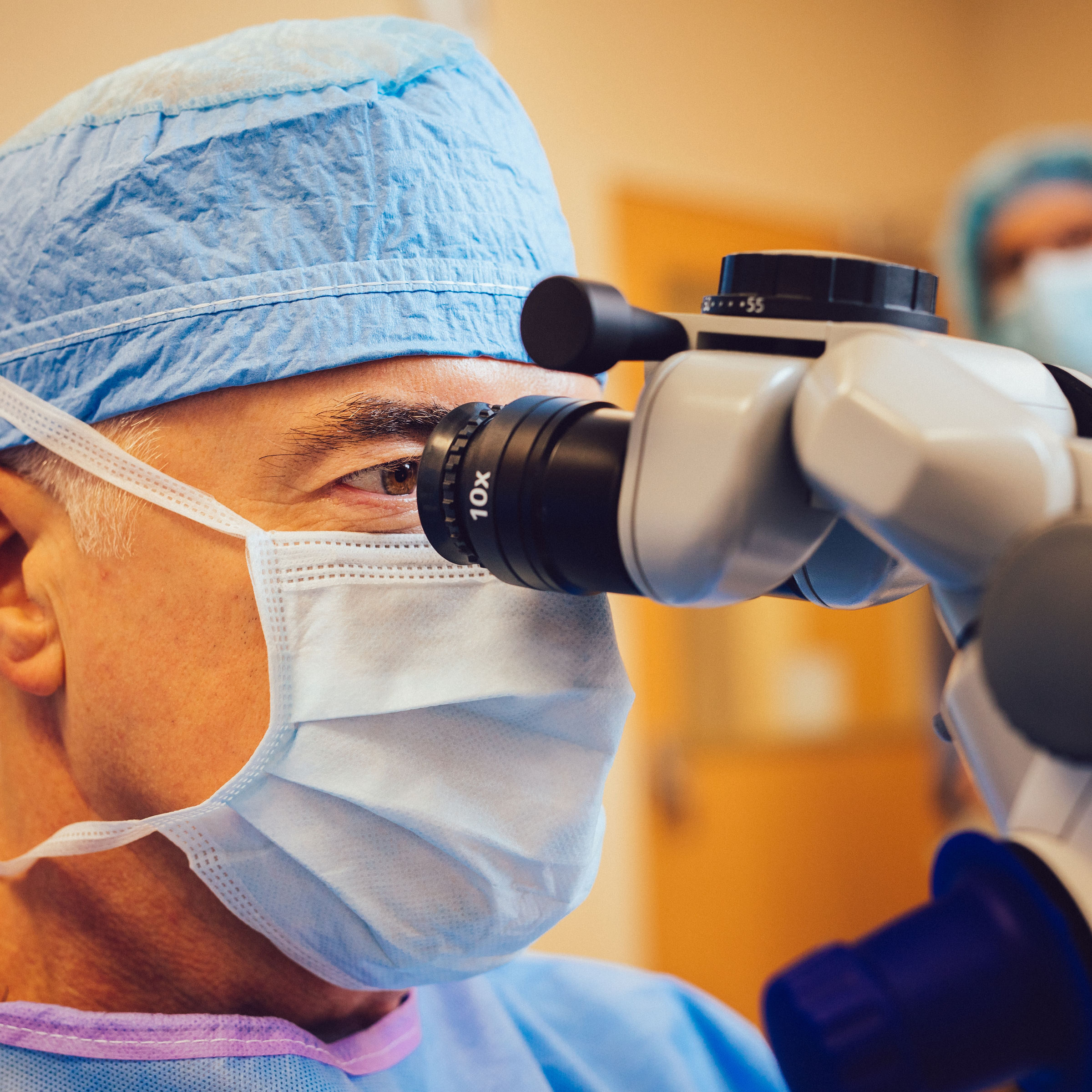
In the operating room, an instrument will comfortably hold your eyelids open during the surgery. You will not feel the need to blink because your eye will be numb. The procedure generally takes about 10 minutes. The cataract is broken up by ultrasound and removed from the eye. The ease of this depends on the density of the cataract. Once the cataract has been removed, an intraocular lens implant is placed inside the eye. Cataract surgery is very safe. Our complication rate is less than 1%.
Usually the eye is not patched. Your total stay at the surgery center will be about an hour and a half. Most patients leave about 15 minutes after the surgery, but you may feel some effects of the sedation for several hours. Patients often go out to eat on the way home. It is normal for the vision to be blurry the evening of surgery. Your eye may also be a little scratchy or watery, like a grain of sand is in it. We ask that you take it easy the evening of surgery, but you may do activities such as reading or watching TV as long as no discomfort is noticed. Most patients return to their normal activities the very next day.
Do you want to Enjoy Life Without Depending on Glasses after Surgery?
It is possible that you may need to wear glasses after your cataract surgery, even if you did not wear them before surgery. Your vision after surgery depends on the choices you make before surgery. This decision will significantly impact the quality of the rest of your life, so it is important that you understand the difference.
Removing the cataract with ultrasound was invented in the late 1960s and has been commonly used for cataract removal since the late 1980s.
What Range of Vision do you want to See without Glasses?
It is possible that you may need to wear glasses after your cataract surgery, even if you did not wear them before surgery. Your vision after surgery depends on the choices you make before surgery. This decision will significantly impact the quality of the rest of your life, so it is important that you understand the difference.
1. Basic cataract surgery
Basic cataract surgery includes removing the cataract and replacing it with an intraocular lens implant (IOL). This procedure does not correct astigmatism. Astigmatism is due to the curvature of the cornea and can be corrected by glasses. You will likely wear glasses most, if not all of the time after basic surgery, especially for reading, even if you do not wear glasses now. Glasses are typically prescribed about two weeks after surgery. Most insurance companies help pay for new glasses after cataract surgery.
Basic cataract surgery is considered to be medically necessary and is generally covered by medical insurance.
2. Premium cataract surgery (Refractive cataract surgery)
Many people have worn glasses for so long it may be difficult to imagine what life might be like without them. Depending on the range of vision you select, you may be able to read the newspaper, drive to town, go shopping, play golf and read a restaurant menu, books, or magazines without depending on their glasses. For many people this means having functional vision without depending on glasses for the first time in their lives.
Premium cataract surgery includes removing the cataract, but with additional treatment to reduce or eliminate your need for glasses. Your insurance will be filed for the medically necessary part of the procedure. This additional treatment is considered elective and not covered by insurance.
Monofocal IOL
This option is designed to provide good vision at one range. Most patients choose good distance vision for driving and watching TV. Reading glasses will be required for arm's length (intermediate) and up close (near) tasks. Astigmatism will be treated with surgical incisions or an astigmatism-correcting implant.
Multi-range IOL
This option is designed to provide good vision at multiple ranges without depending on glasses. Most people who select this option have functional vision at all ranges and rarely wear glasses. Glasses may still be required for certain tasks, such as reading small print. Astigmatism will be treated with surgical incisions or an astigmatism-correcting multi-range implant.
Which option is best for me?
This partly depends on what your vision goals are after surgery. Additional pre-operative testing is required for premium options. Most people are very good candidates for these options, but there are exceptions. Refractive options are generally recommended for people with reasonably healthy eyes. If you have conditions such as macular degeneration or diabetic retinopathy, the surgeon will discuss realistic expectations with you.
Enhancements or “Touch-ups”
While the methods used to calculate your IOL power are very accurate, the final result may be different than what you and your surgeon planned. Everyone heals slightly differently. If this is significant enough to interfere with your functional vision an enhancement or “touch-up procedure” may be performed to tweak the results and refine your vision further.
When will I have my best vision after premium surgery?
Most people see well soon after surgery. However, it may take a few weeks for your brain to adjust to your new vision, especially if a multi-range lens implant is used. This is called “neuro-adaptation”. Your vision may continue to improve for several months following the procedure. Minimal glare or halos around lights especially at night is normal for the first few months.